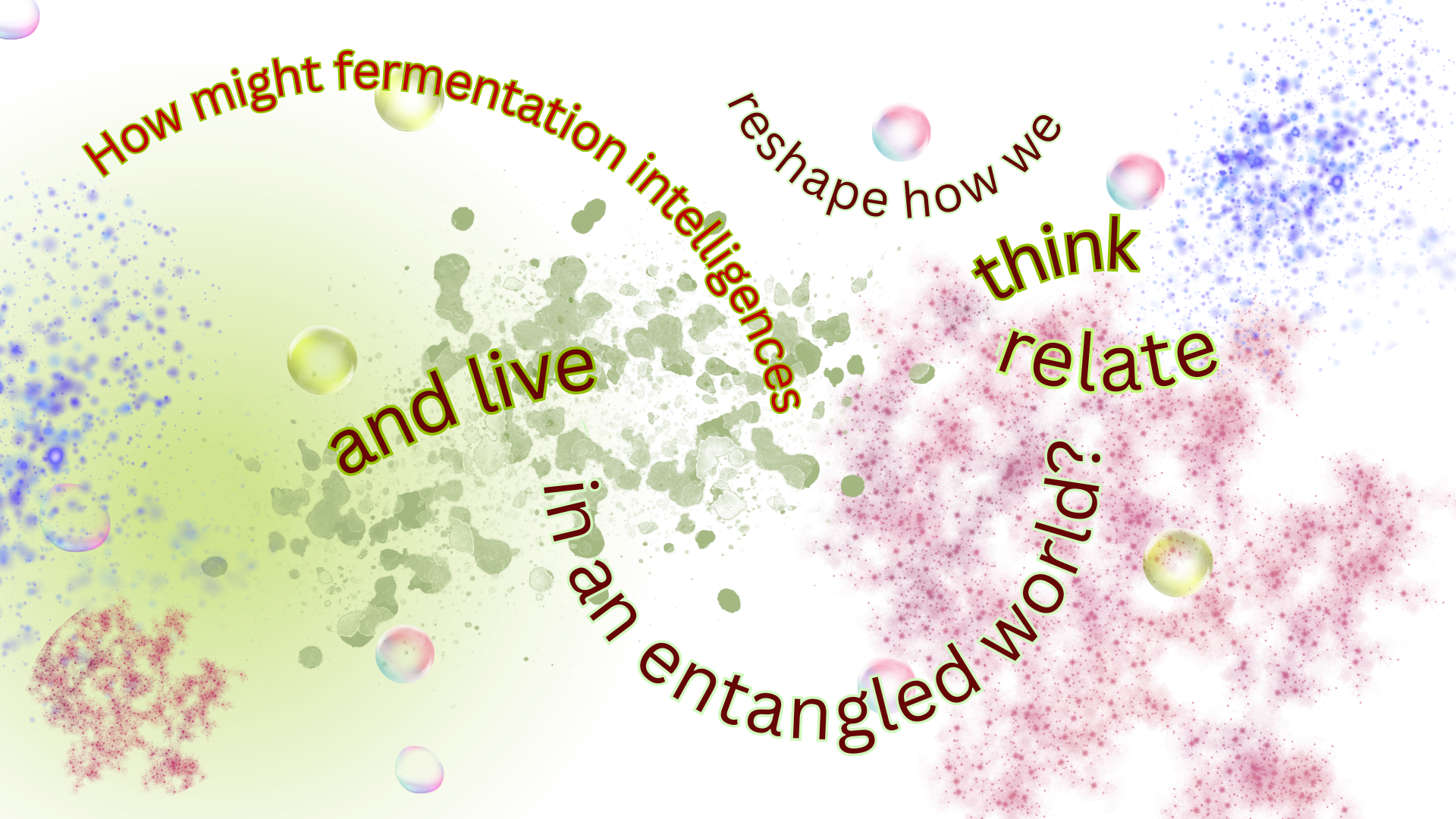
M5 traces the movement of my practice through four intertwined layers: material, metaphor, manners, method, and methodology. It begins with fermentation as a hands-on, sensorial, and embodied material practice; expands into speculative metaphors that articulate Fermentation Intelligences; distills into working methods (fermethods); and culminates in a guiding methodology—fermentology.
M5 is both conceptual and tactile: a vessel for enquiry, a relational framework, and a lived, evolving orientation for making, learning, and thinking with others (human and more-than-human).
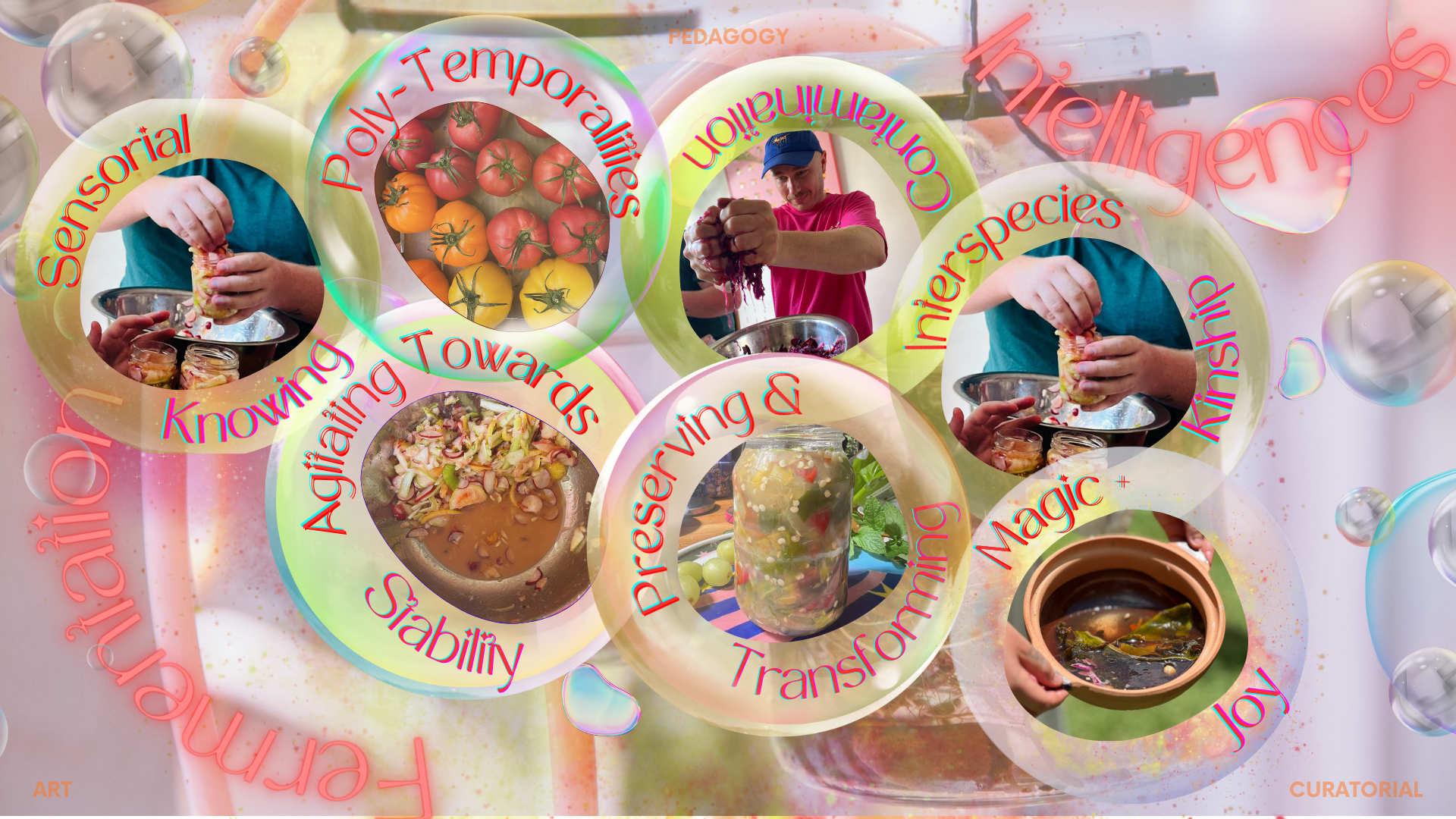
From material practice, fermentation expands into metaphor. These metaphors become Fermentation Intelligences—ways of knowing that are sensorial, relational, and speculative. Each carries a lineage of thinkers and a conceptual orientation:
Poly Temporalities (Odell, 2023) An intelligence of layered, non-linear time—slow, cyclic, resistant to acceleration. Fermentation teaches how growth, decay, and renewal fold into one another.
Preserving & Transforming (Fournier, 2020) Ancestral and embodied knowledge persists through change. Fermentation holds the paradox that survival, decay, and transformation coexist as generative forces.
Agitating Towards Stability (Chen, 2018) Disturbance becomes a condition for strength. As ferments bubble, shake, and aerate, agitation catalyses new formations and unexpected coherences.
Interspecies Kinship (Haraway, 2016) Fermentation is co-created through more-than-human relations. This intelligence recognises interdependence, care, responsibility, and co-flourishing across species.
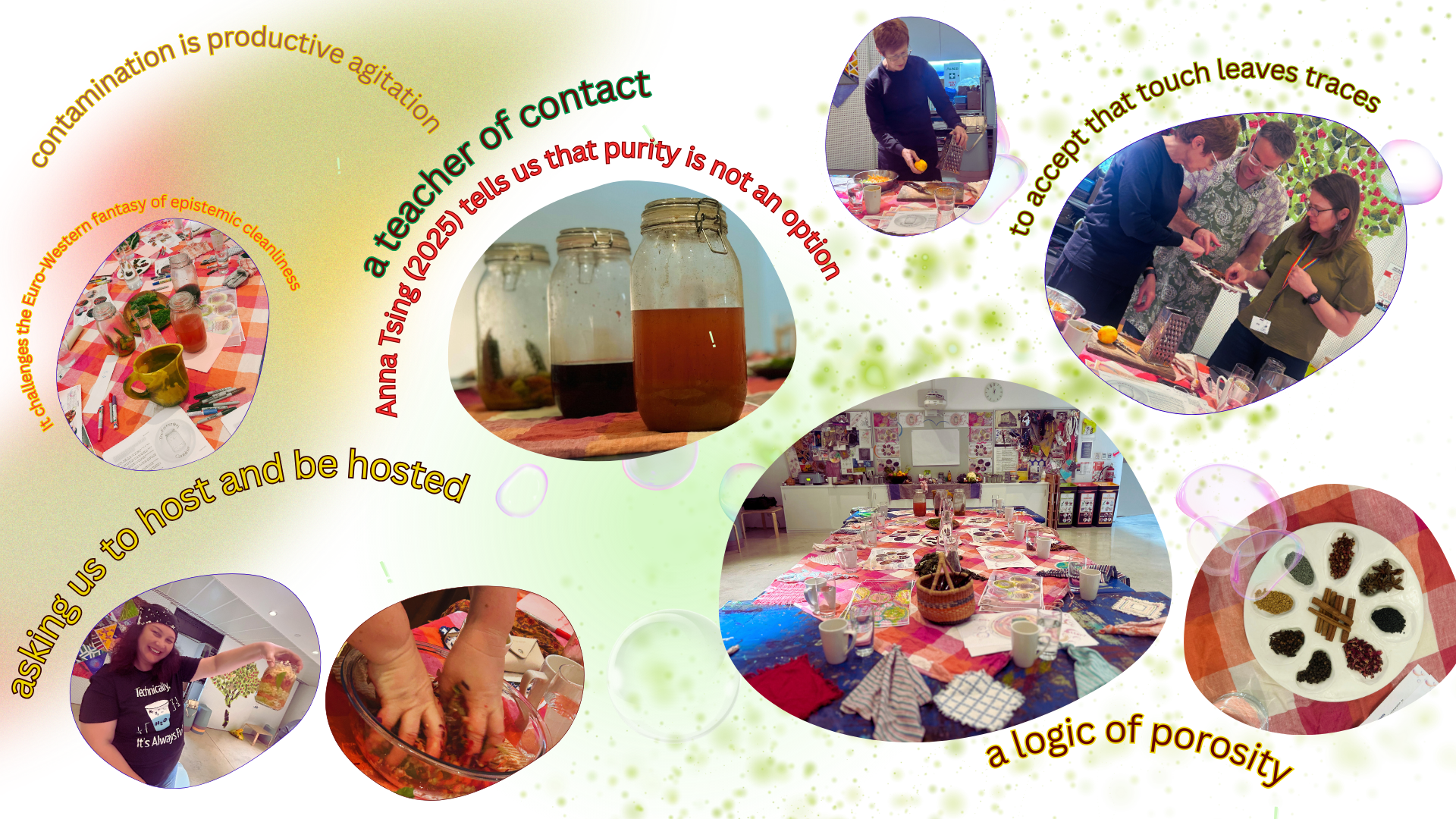
Contamination (Katz; Tsing, 2015; Van Groll & Kummen, 2021) Purity is a myth. Fermentation values mixture, encounter, hybridity—revealing contamination as a driver of creativity, vitality, and becoming-with.
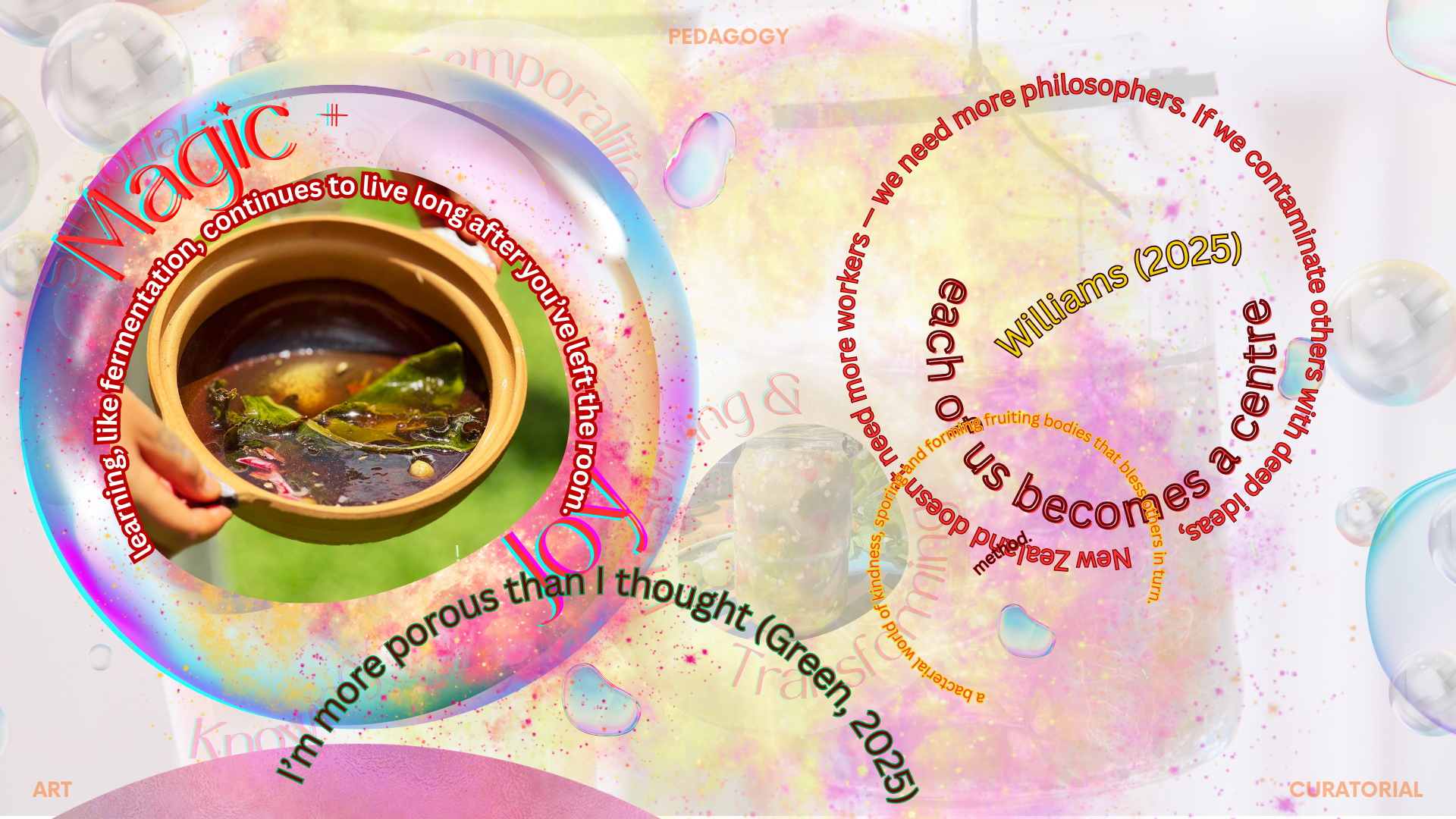
Magic + Joy Purposefully elusive and beyond language. This is an intelligence that resists definition: atmospheric, affective, emergent. It recognises aliveness, wonder, and the felt shimmer of complexity.
Sensorial Knowing Knowledge arises through taste, touch, smell, proximity—learning that moves through the body before language.
These intelligences are never static.
They seep, mingle, leak, and influence. They teach through contact and co-presence, offering not a framework but a living ecology of thought shaped by context, site and relation.
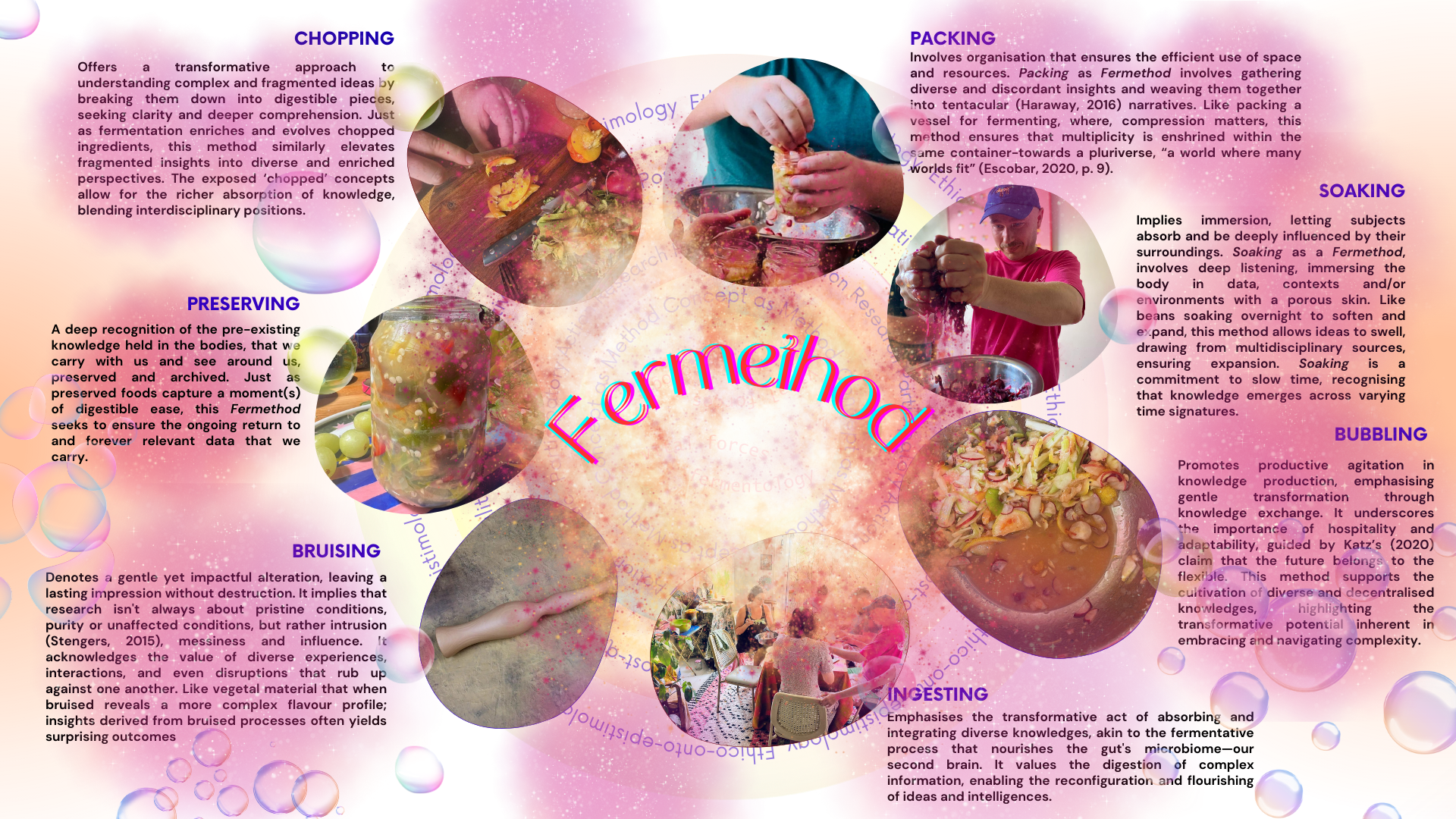
The method in M5 emerges from the material and metaphorical layers. These are ferm-ethods—working approaches that shape how data is gathered, interpreted, distilled, and made meaningful.
Each fermethod is derived from the six material forces and opens distinct analytic possibilities:
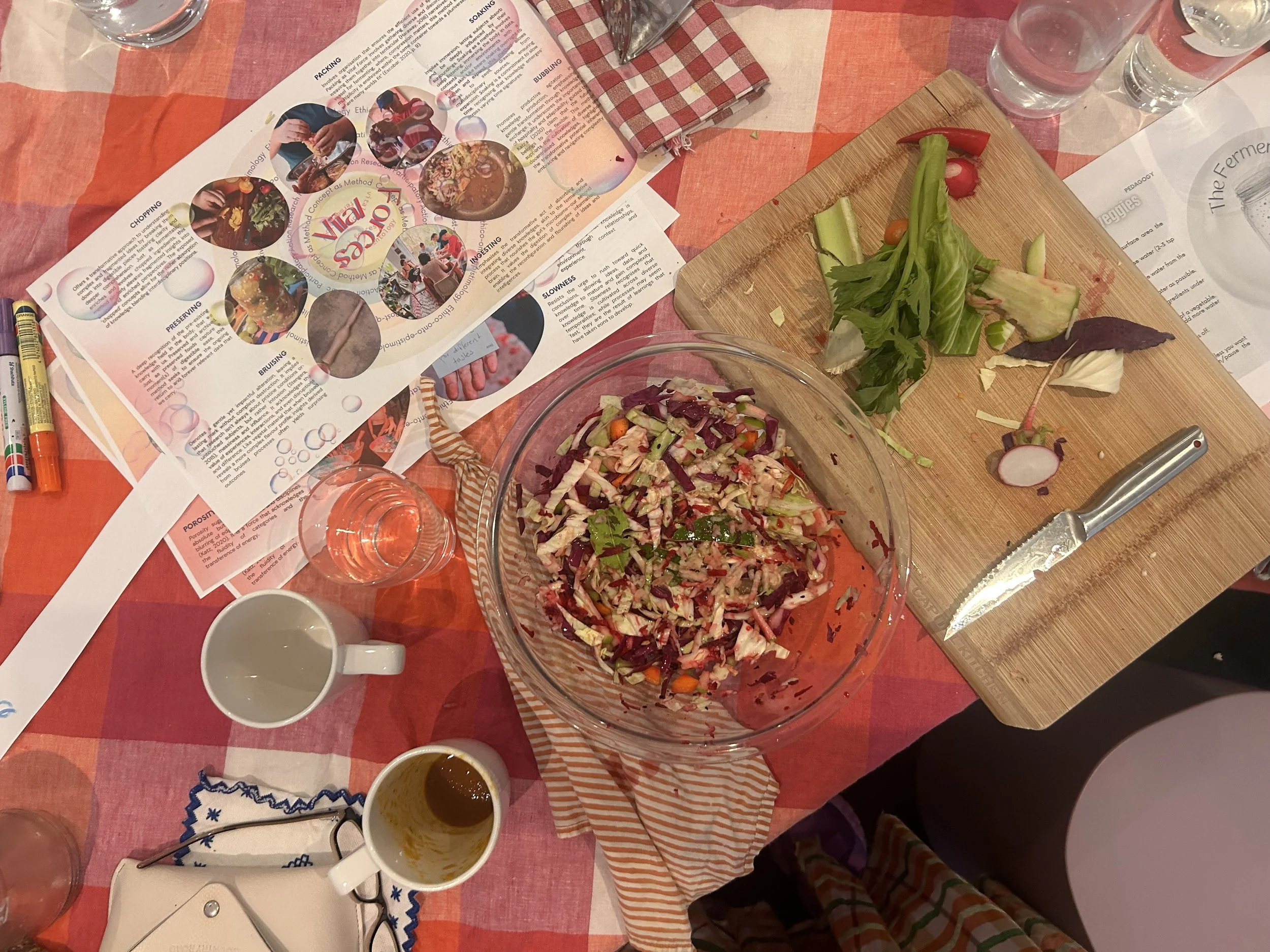
Chopping → Fragmenting data to reveal overlooked textures and micro-patterns.
Preserving → Holding and storing fragments across time to observe slow shifts and latent meaning.
Bruising → Applying gentle pressure to data to expose sensitivity, rupture, and material resistance.
Packing → Layering relational fields—stacking narratives, perspectives, or bodies of knowledge to see their compression points.
Soaking → Immersion-based analysis; allowing concepts to swell, soften, or absorb new influences.
Bubbling → Attentiveness to emergence—tracking ideas that rise, cluster, or cohere through agitation.
These fermethods are speculative yet grounded; they open analytical spaces where data can ripen, ferment, and transform rather than be forced into premature clarity.
The Manners, offer poetic language for thick pedagogical descriptions.
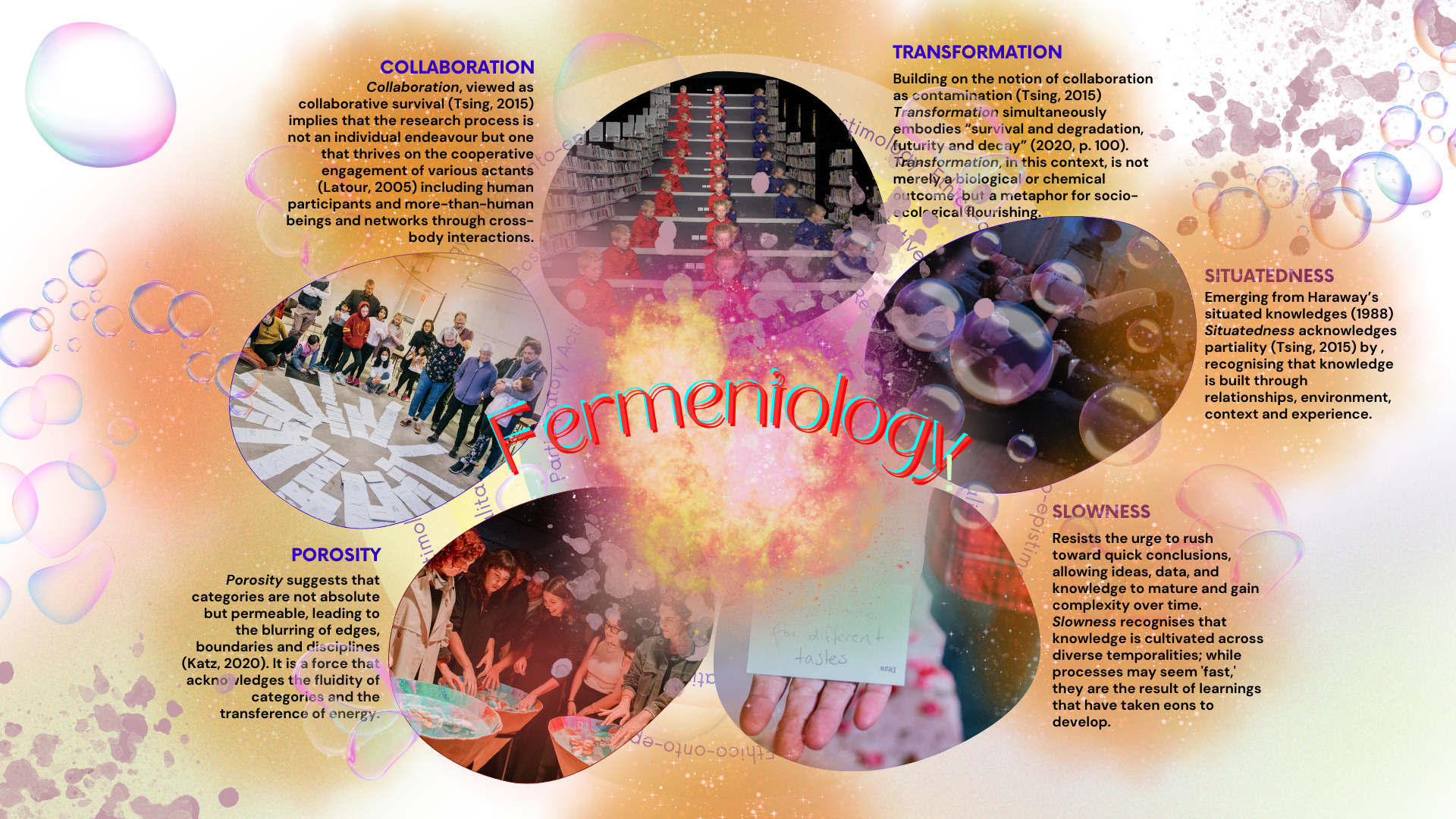
At the widest scale, M4 becomesfermentology—the methodological orientation that determines how I work, shape, and prioritise learning exchange.
Fermentology is:
Slowness – Allowing ideas, relations, and data to mature in their own time.
Situatedness – Understanding knowledge as contextual, embodied, relational.
Transformation – Holding survival/decay, futurity/adaptation in tension.
Collaboration – Thriving through multispecies entanglement and co-making.
Porosity – Softening boundaries to enable leakage, influence, and co-creation.
Fermentology is the guiding force of the entire practice: the material, the metaphor, the method, and the teacher.
It keeps the work alive—bubbling, relational, uncertain, and always becoming.
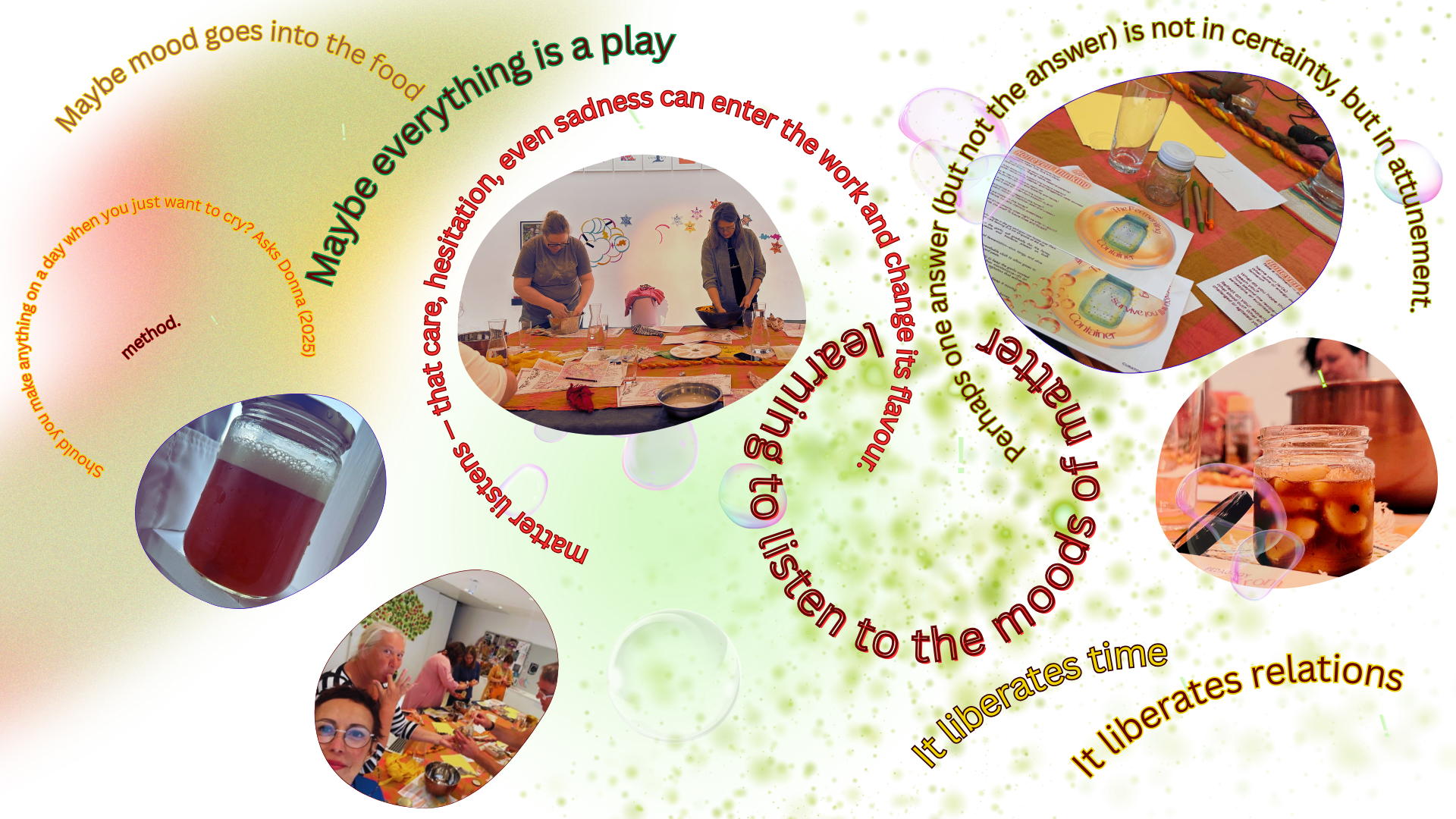
Fermentation Manifestation #2: Thinking Bodies.Fermenting Worlds (2025), Govett-Brewster Art Gallery | Len Lye Centre
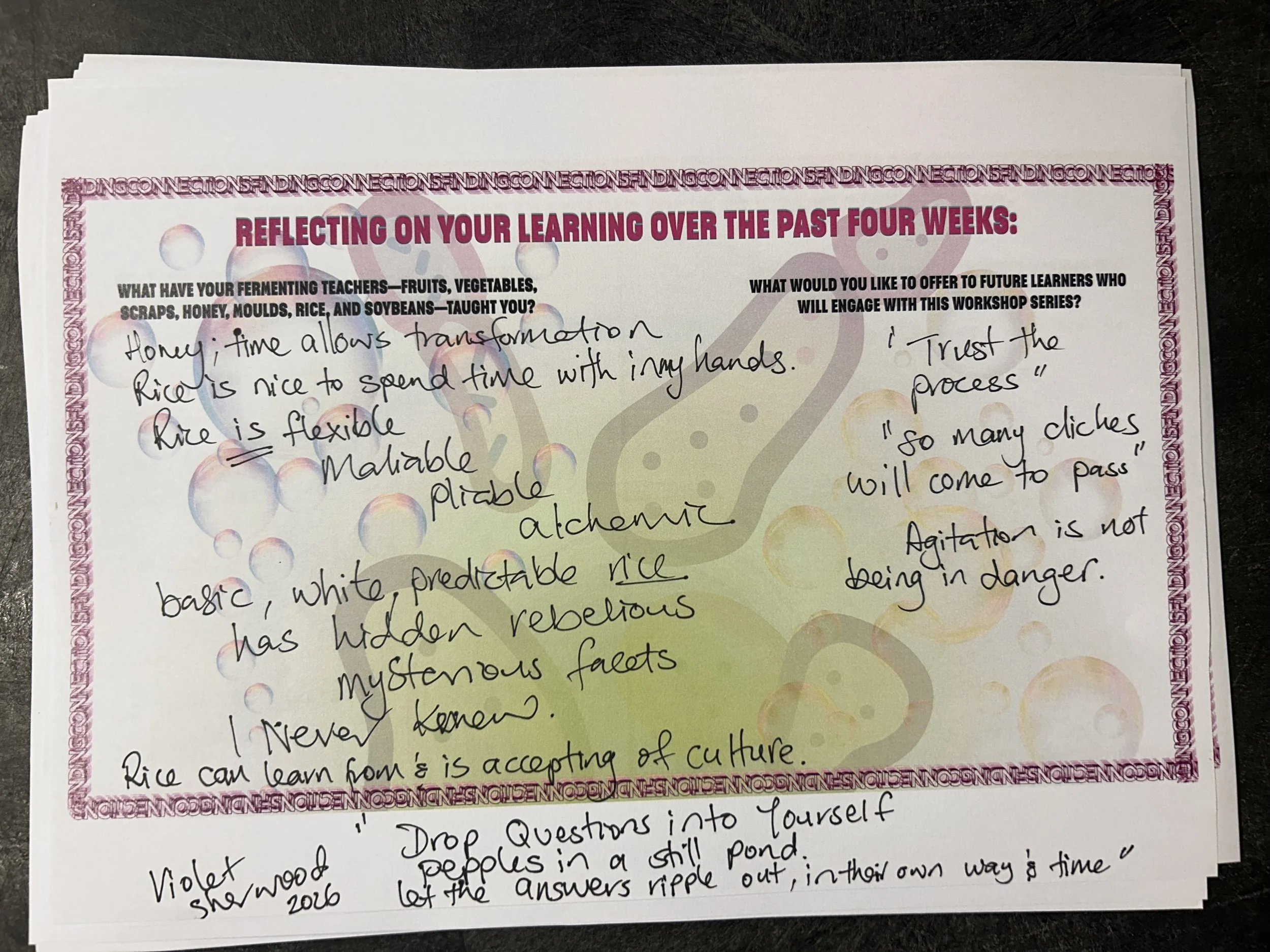
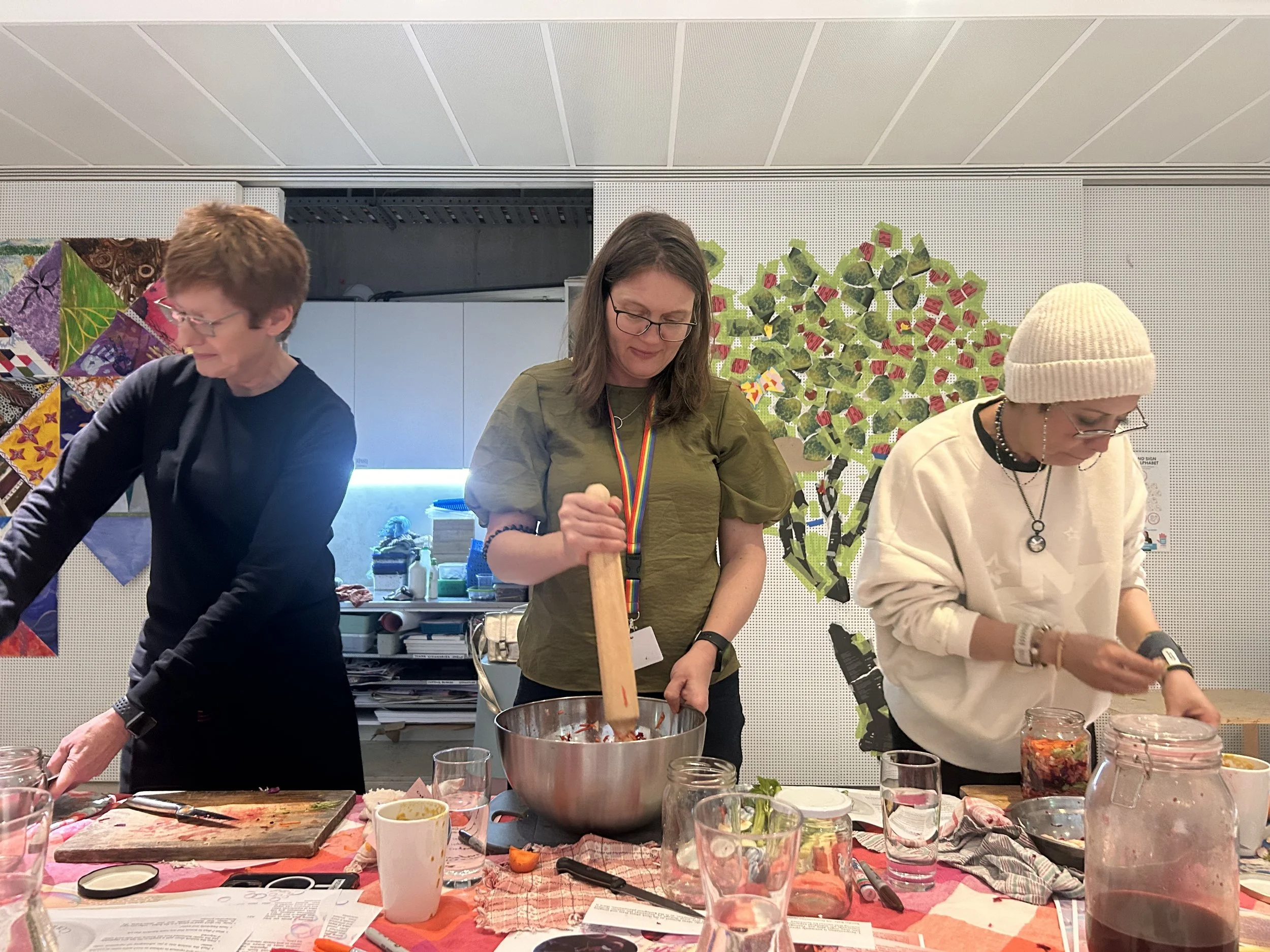
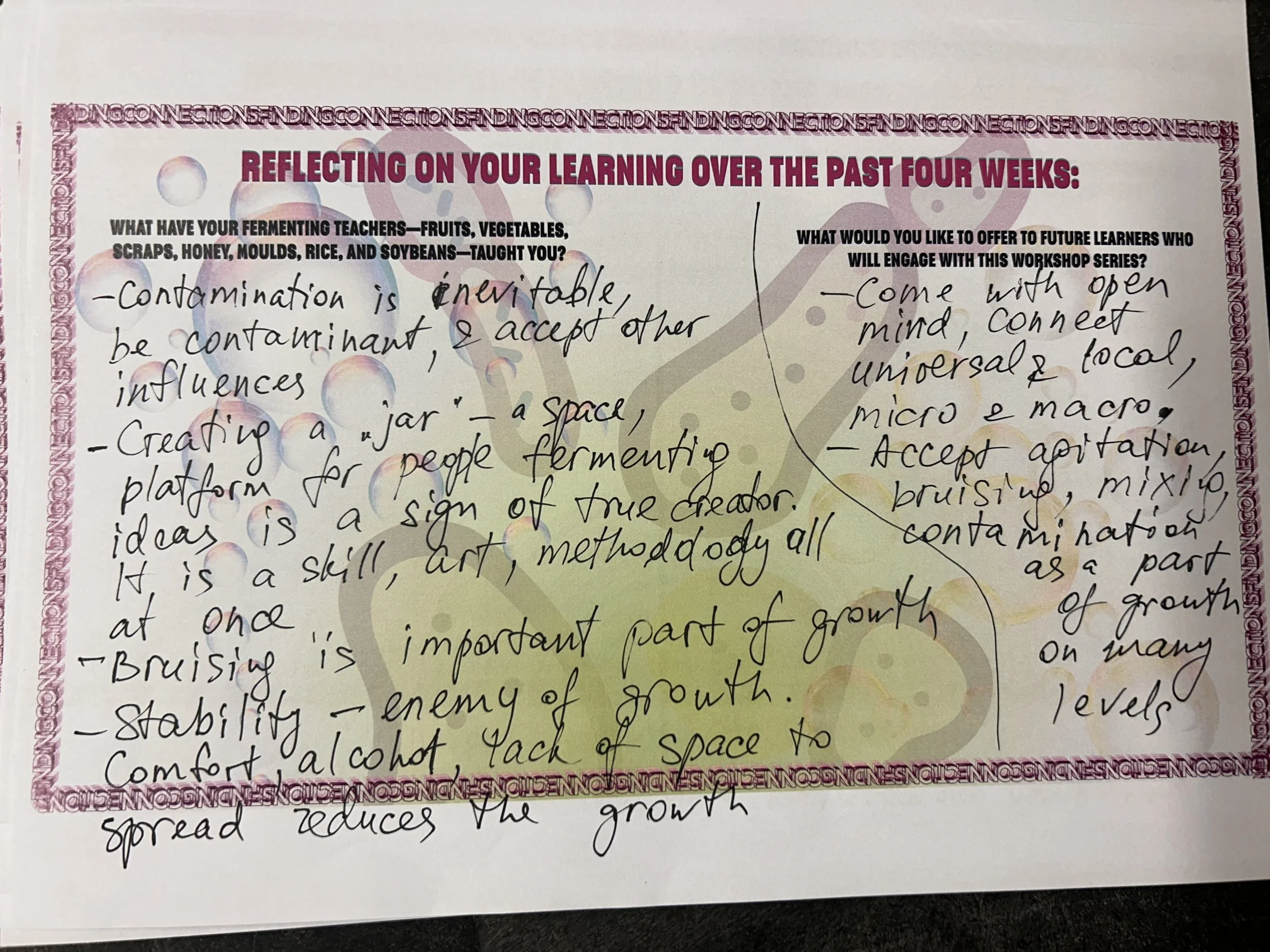
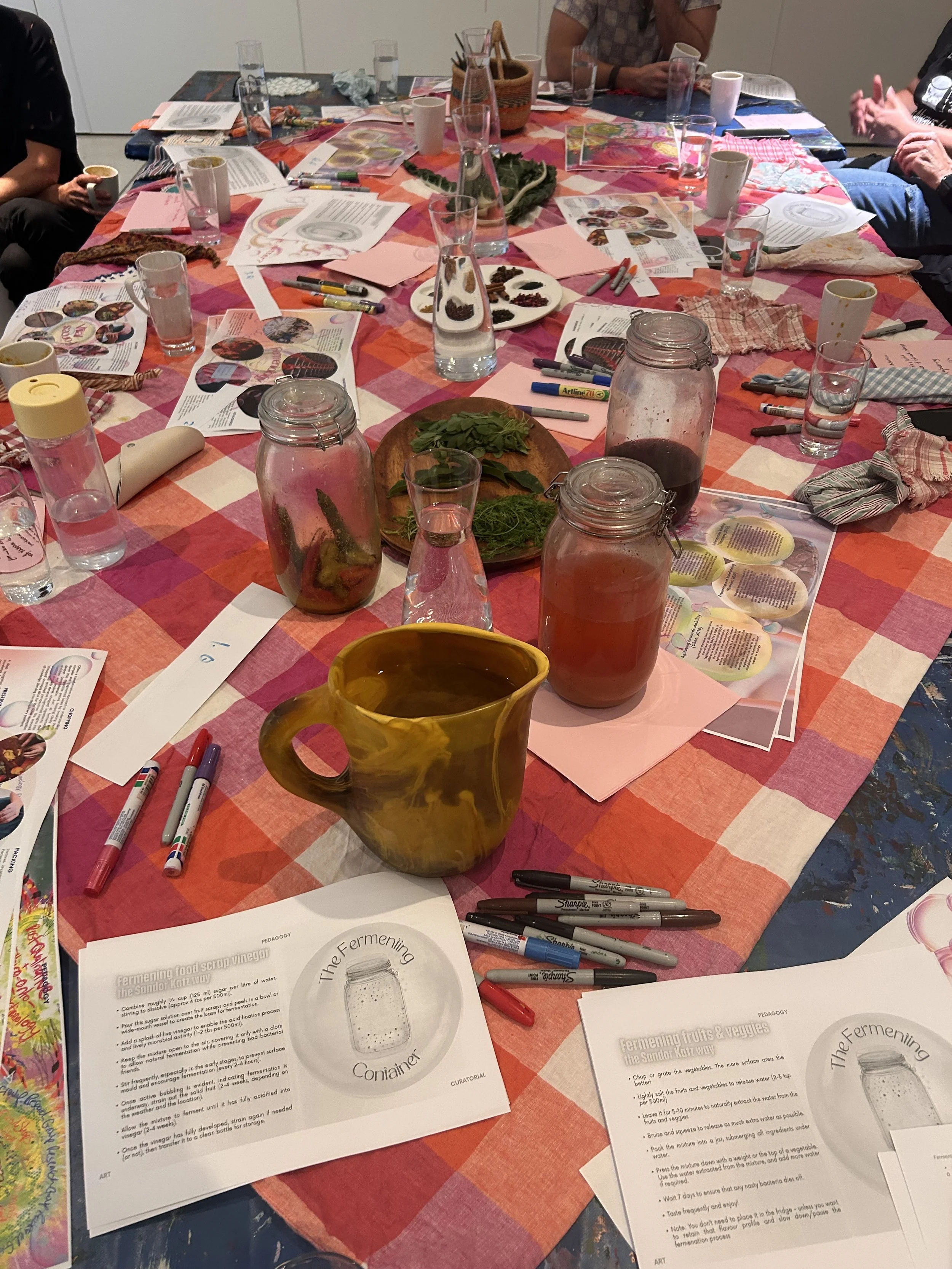
Thinking Bodies.Fermenting Worlds was a lively independent research project running from 17 May to 7 June 2025 at the Govett-Brewster Art Gallery | Len Lye Centre. This four-part workshop series brought participants together each Sunday afternoon for what I called ‘fermencises’—creative, climate-attuned exercises in microbial pedagogy. Across these sessions, fermentation emerged not as a food trend or as pleasure but as a method of co-becoming: a way to feel our way through the urgent complexities of ecological crisis, postcolonial rupture, and capitalist acceleration.
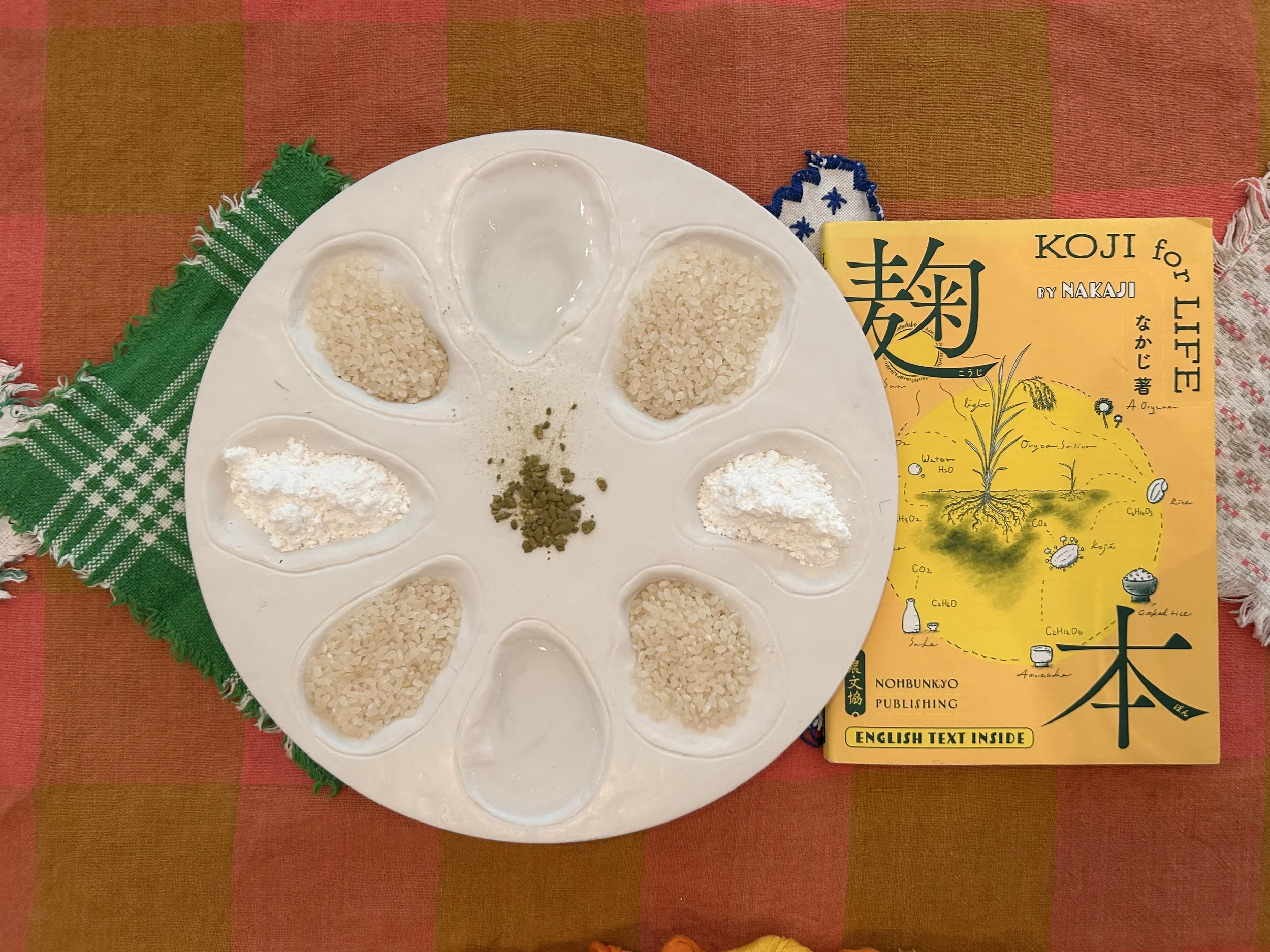
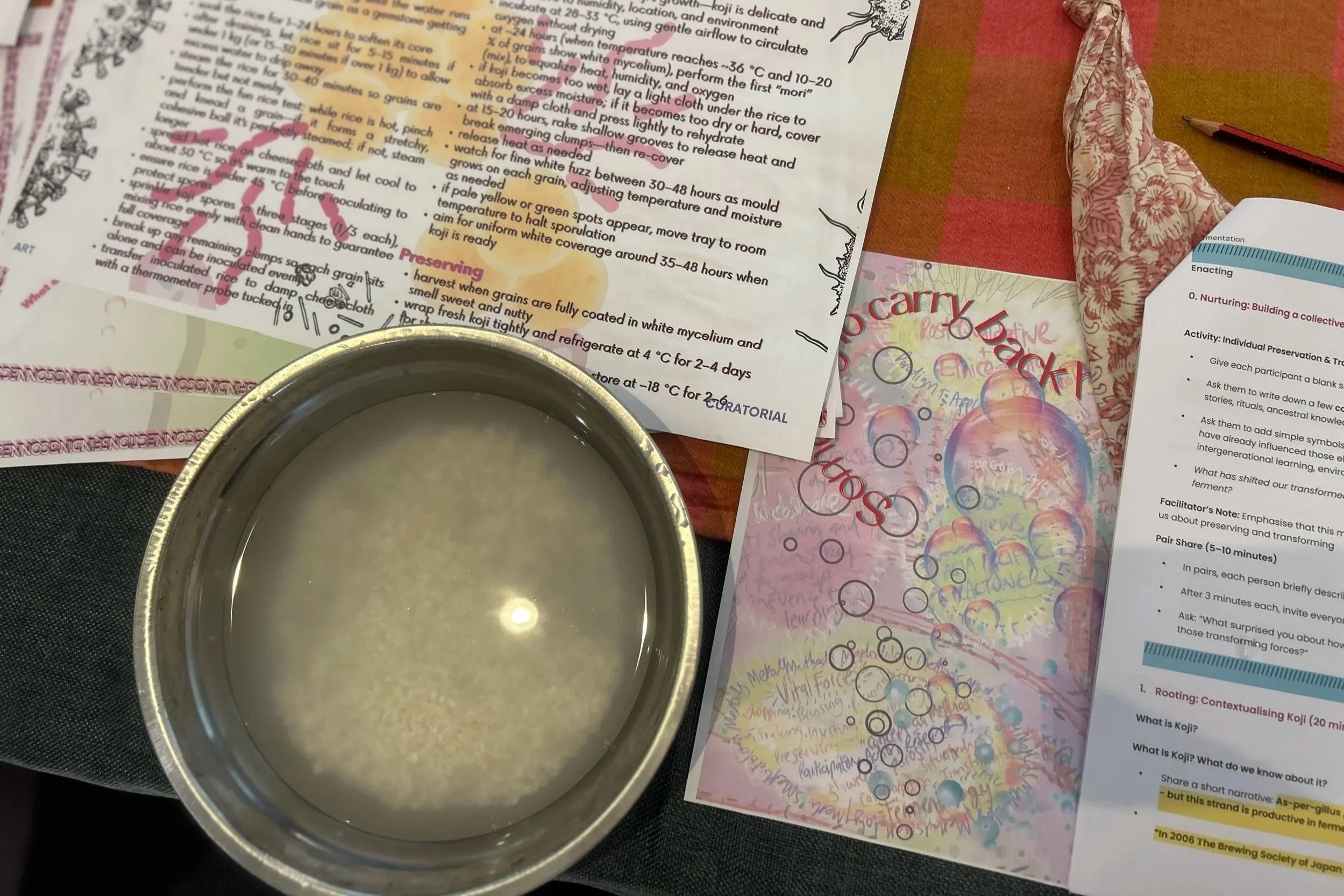
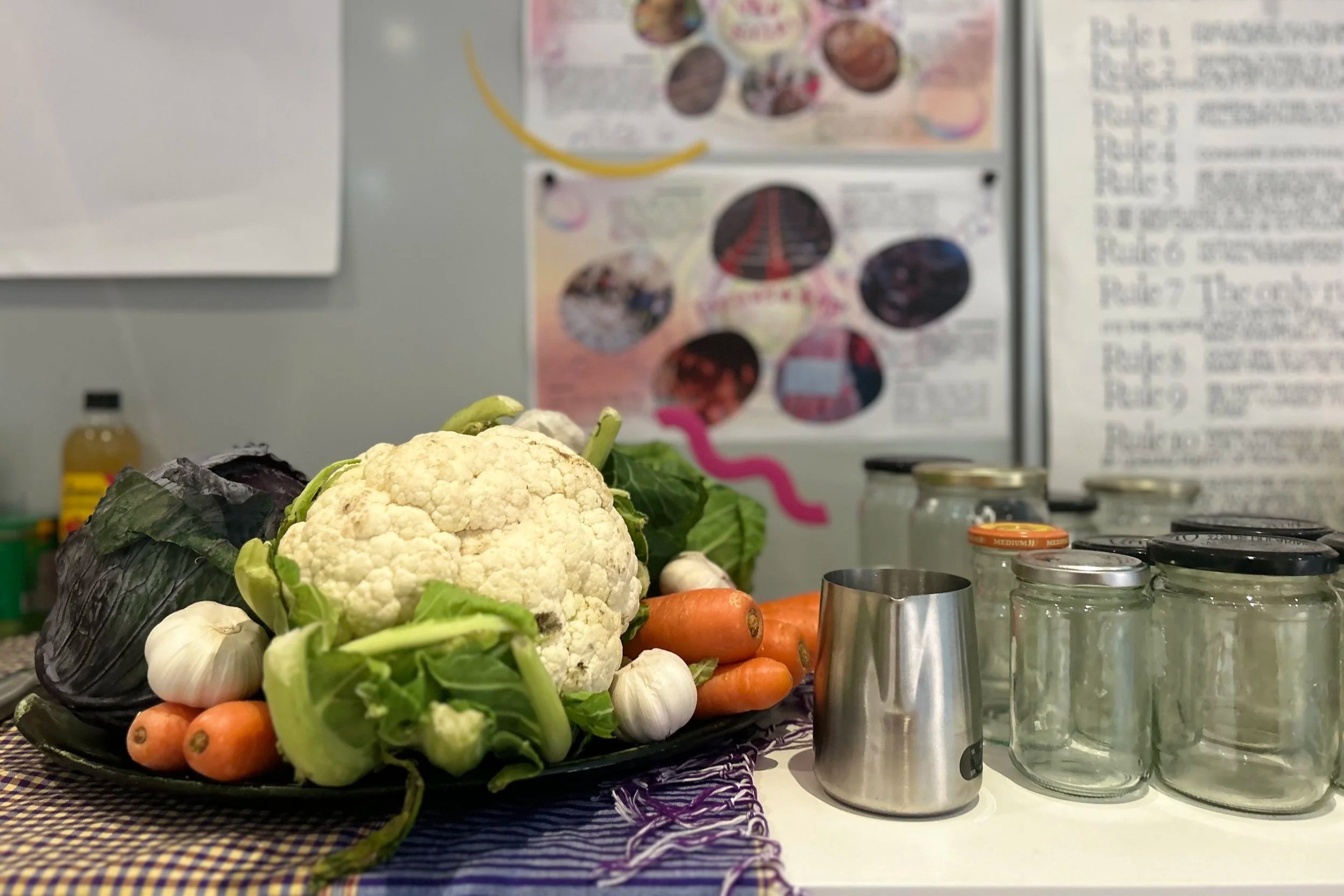
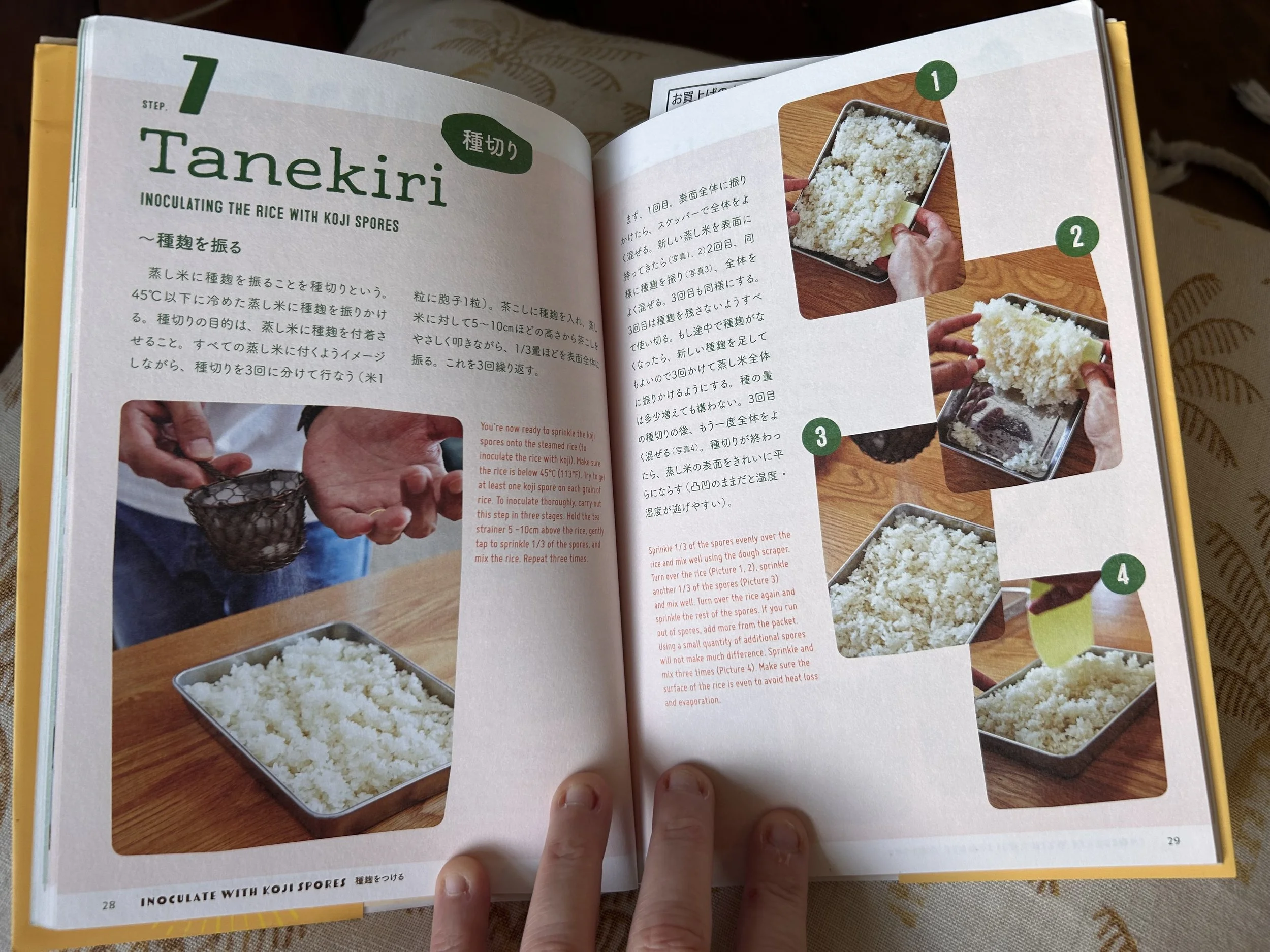
Each fermencise was anchored in one of five fermentation intelligences: Contamination with Salty Jars (Katz, 2003, 2020; Van Groll & Kummen, 2021), Queer Temporalitieswith Food Scrap Vinegar (Florêncio, 2020), Interspecies Kinship with Honey (Haraway, 2016), Agitating Towards Stability with Koji (Chen, 2018), and Preserving & Transformingwith Miso(Fournier, 2020). These intelligences were not delivered as content but encountered through embodied processes—chopping vegetables, massaging salt into cabbage, inoculating rice with spores, observing bubbles, and stirring honey. Participants, ranging from social workers and educators to designers, artists, financiers, retirees, farmers and community carers, brought with them a diversity of expertise.
These differences did not dissolve in the ferment; they enriched it. As one participant wrote, “a bacterial world of kindness… sporing and forming fruiting bodies that bless others in turn” (Williams, 2025).